All-inclusive tomography workshop

Into the Tomosphere 2026 is born from a joint effort inside the National Centre for Biotechnology in Madrid. Led by the TomoClub initiative, this event aims to gather tomography fans from all around for a full day of exploring the past – but also the future – of this amazing umbrella of techniques.
When? Where? How much?
This workshop will be celebrated in a day that is still to be determiend, during October, 2026. It will cover a whole day with a keynote, talks and demonstrations.
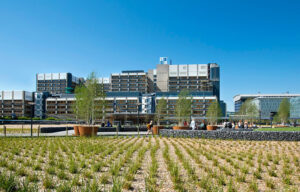
The venue will be the National Centre for Biotechnology (CNB-CSIC), specifically the Salón de Actos (talks) and the hall (refreshments). Registering is mandatory but there is no fee to access the event.
Main topics
Tomography – and cryo-electron tomography- are two terms employed to refer to a wide variety of matters. The tomosphere as we envision it in the TomoClub is composed by the following fields and topics:
- Sample Preparation – The base of any and all cryoET projects must start from here. Yet, sample preparation does not get the attention it deserves. Many times, breakthroughs in specific projects end up as a three-liner paragraph.
- Data acquisition and equipment operation – TEM, SEM, FIB-SEM, CLEM, «everything-EM» acquisition equipment takes a very trained person to be used optimally and get the most out of the hardware. Each model (and even each microscope) works with its own nuances and tricks, with some of them being quite extrapolable and helpful for both operators and clients of the facilities.
- Image processing workflows and approaches – The current state of tomography is telling us that in a short time we will not be able to manually curate and process our data. Automated workflows, software suites, data management strategies… will grow in importance as tomography scales up and methods stabilise.
- Methods and algorithms – It can be said that the field is boiling in terms of methods and algorithms. AI is definitely pushing the pace at which methods and algorithms are developed, as it can be seen by how many cryoET papers are published per year in the last 2 years.
Target audience
Everyone is welcome in the workshop. The tomosphere is an open and welcoming space for all structural biologists. We have found that the following profiles would make the most out of it:
- PhD students – We have a critical mass of students in Spain (and surroundings) working on projects directly or indirectly related to tomography. This includes using cryo-CLEM, FIB-SEM, cell segmentation, STA… as well as developing workflows and programmes.
- Lab/Facility technicians – Nothing would ever function if it was not for the amazing people working on having the best experiment preparation and microscope operation. Many discoveries that affect the whole workflow are born here.
- Postdocs/Young PIs – The origin of new ideas, new laboratories and paradigm shifts usually start with Postdocs not agreeing with their PIs. In a search of distinguishing their work from others, Postdocs (and young PIs) push the field to previously unexplored places.
- Established PI’s & Facility/Centre directors – They’re the cornerstone of science. Their support and continued effort in research and funding is what allows progress to be made, and new generations to be established in the field. They bring indispensable knowledge and experience, both scientific as well as political.
Other figures and profiles are also welcome.
Confirmed speakers
Javier Chichón
Microscopist @ CNB-CSIC, ES
Javier played a key role in the implementation of tomography in Spain, almost 20 years ago. He works operating the CryoEM-CSIC Facility under Rocío Arranz's direction, but also does exploratory science related to acquisition.
Bram Koster
Full Professor @ LUMC, Netherlands
Abraham J Koster is considered the father of the electron-microscope autofocus, and a very important political actor in the development of structural biology both at European level and worldwide. His position gives him a privileged look into the past and future of the field. He actively collaborates in methods development and image processing in the field of cryoET.